Showing posts with label Mercedes. Show all posts

Barnfind 1958 Gullwing 300SL found is rarer than most, it's one of 29 factory racecars, special alloy metal bodies, plexiglass windows

The owner of the car, Tom Wellmer, had received the new 1955 special alloy M-B gullwing coupe in New York as a graduation gift from his parents. He drove it into the 1970s until the transmission broke.

Then he put the car up on jack stands and began taking it apart. He took the wheels and hood off, the interior out and removed the transmission. And then the car just sat ... for more than 40 years.

Read about the 40 year buried treasure (restored it's worth about 2.5 million)  from a Santa Monica garage on http://www.vancouversun.com/cars/Classic+mystery+solved/5375859/story.html#ixzz1YeLyh6aC  found via an article on http://classiccars.about.com/b/2011/09/20/missing-competition-special-mercedes-gullwing-found.htm

4 dr Sports Car 1971 300SEL of Udo Putzke

 gotta wonder why those little wings were added in front of the wheels, they couldn't have much effect based on their size... could they?


 great hats, serious cool touch to reinforce the German heritage

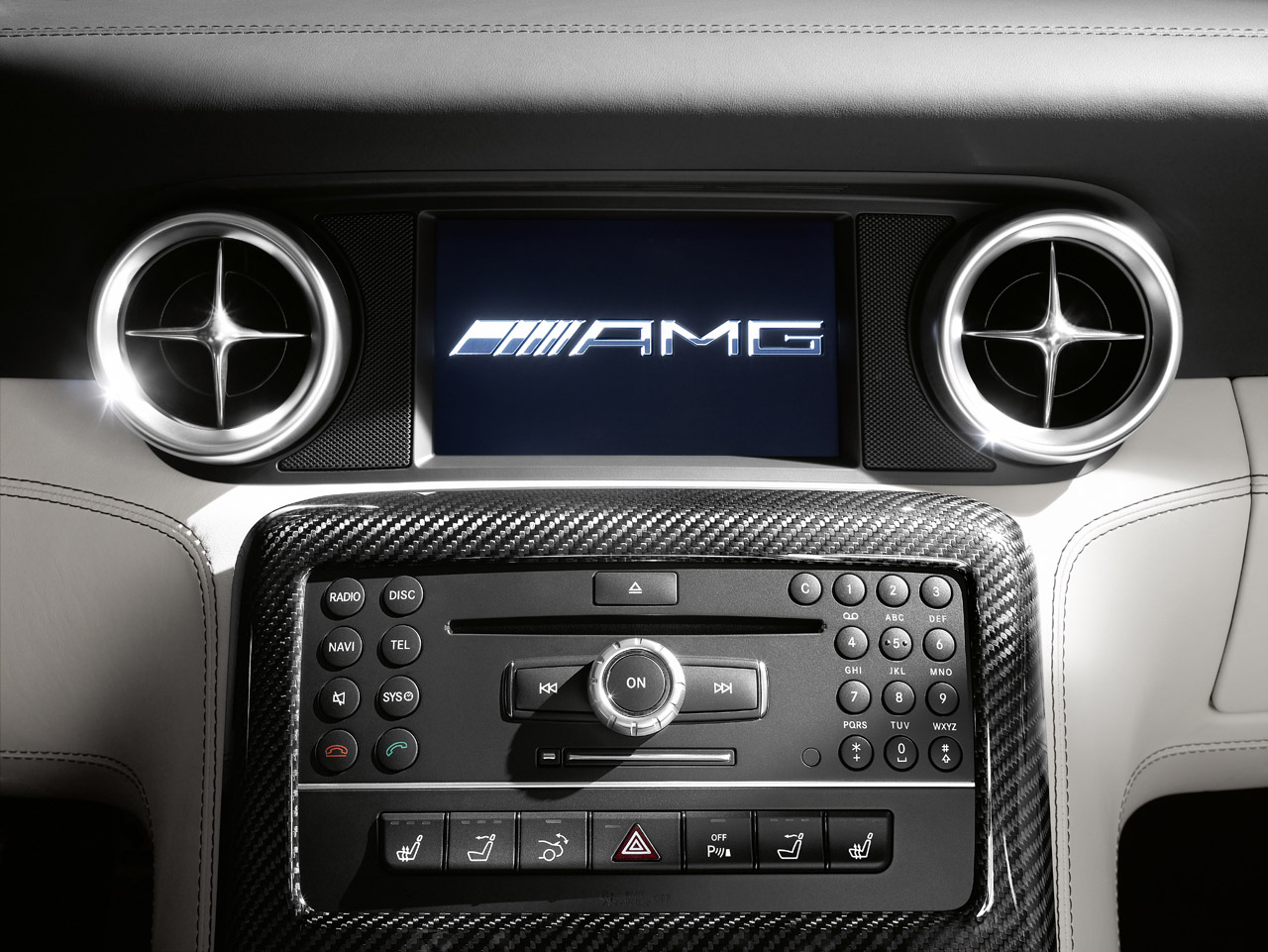
AMG Lightweight Performance: SLS AMG E-CELL gets carbon-fibre spine


The SLS AMG E-CELL body shell being shown by Mercedes-Benz AMG at the IAA 2011 is one trailblazing outcome of its ambitious "AMG Lightweight Performance" design strategy. Its key element is a transmission tunnel made out of lightweight carbon-fibre composite material (CFRP), which is structurally integrated into the aluminium body shell and firmly bonded with it. The high-strength and stiff CFRP component helps to reduce weight, while also serving as a monocoque housing for the battery modules.

The carbon-fibre battery monocoque in the SLS AMG E-CELL forms an integral part of the body shell and acts as the vehicle's "spine". The advantages of carbon composite materials were specifically exploited by the AMG engineers in its design. These include their high strength, which makes it possible to create extremely rigid structures in terms of torsion and bending, excellent crash performance and low weight. CFRP components are up to 50 percent lighter than comparable steel ones, yet retain the same level of stability.

Compared with aluminium, the weight saving is still around 30 percent, while the material is considerably thinner. The advantages in terms of weight achieved through the carbon-fibre battery monocoque are reflected in the agility of the SLS AMG E-CELL and, in conjunction with the highly innovative wheel-selective four-wheel drive system, ensure true driving enjoyment.

The carbon-fibre battery monocoque is, in addition, conceived as a "zero intrusion cell" in order to meet the very highest expectations in terms of crash safety. It protects the battery modules inside the vehicle from deformation or damage in the event of a crash.

Tobias Moers, Member of the Board of Management of Mercedes-AMG GmbH, responsible for overall vehicle development: "AMG Lightweight Performance is the term we use at AMG to encompass all the different technologies involved in lightweight construction. The use of carbon makes vehicles not only lighter, but even more efficient and agile – in motorsports and on the streets. This is especially important for sports cars."

The basis for CFRP construction is provided by fine carbon fibres, ten times thinner than a human hair. A length of this innovative fibre reaching from here to the moon would weigh a mere 25 grams. Between 1000 and 24,000 of these fibres are used to form individual strands. Machines then weave and sew them into fibre mats several layers thick, which can be moulded into three-dimensional shapes. When injected with liquid synthetic resin, this hardens to give the desired structure its final shape and stability.

Through their experience with the SLR, the vehicles in the AMG Black Series and in motorsport, Mercedes-Benz and AMG have accumulated more than 10 years of expertise in working with carbon-fibre materials. AMG currently makes the propshaft for the SLS AMG, for example, in carbon-fibre. On the SLS Roadster, the supporting structure for the draught-stop is made as standard as a carbon sandwich structure. This component, with extremely short cycle times in an industrially oriented manufacturing process, already demonstrates what will be possible in the future.

CFRP components also play an important role in Mercedes-Benz and AMG's lightweight design strategy for the future. In conformity with the motto "the right material, in the right place, the proportion of high-strength steels, aluminium and fibre-reinforced plastics is set to increase significantly in the future. The body shell weight of all Mercedes-Benz vehicles should fall by ten percent compared with their predecessors.

Just how seriously Mercedes-Benz and its high-performance arm AMG are treating the issue of lightweight design as an important factor along the road to sustainable mobility, is demonstrated by the full-aluminium body shell of the SLS AMG. With it, the super sports model shows the way for future model ranges.

News Source: Mercedes-Benz

Mercedes unveil B-Class E-Cell Plus extended-range EV concept [video]


Mercedes-Benz will be presenting its first electric vehicle with Range Extender at the 2011 Frankfurt International Motor Show in the guise of the Concept B-Class E-CELL PLUS. The combination of electric drive and petrol engine ensures excellent suitability for both everyday use and long journeys. The energy accumulator takes the form of a lithium-ion battery from Deutsche Accumotive, which enables local emission-free driving up to a range of 100 kilometres. Thanks to the additional three-cylinder petrol engine, the Concept B-Class E-CELL PLUS has a total range of up to 600 km. The concept vehicle presented at the 2011 Frankfurt International Motor Show provides a foretaste of the series which is to go into production in 2014. The Concept B-Class E-CELL PLUS adds an all-purpose battery-powered vehicle with Range Extender to Mercedes-Benz's range of electric vehicles.

A new addition to Mercedes-Benz's portfolio of electric cars is the near-series Concept B-Class E-CELL PLUS – a compact model that meets all the needs of daily motoring with a total range of up to 600 kilometres. As such, this electric vehicle is also ideally suited to long journeys and offers its driver unrestricted mobility. This is made possible by the combination of a powerful electric drive generating a peak power output of 100 kW and a continuous output of 70 KW with a 50 kW petrol engine. The latter performs a dual role: at low vehicle speeds it charges the battery via a generator. At higher speeds – on prolonged motorway stretches, for example – it additionally serves as a driving engine, acting on the front wheels together with the electric motor via a newly developed automatic transmission.

In all-electric, local emission-free mode the Concept B-Class E-CELL PLUS has a range of up to 100 kilometres. This covers over 80 percent of daily driving needs. The total range of up to 600 kilometres allows the vehicle to be used for long journeys, too. This means that the electric vehicle with Range Extender is fully suitable for everyday use and can be relied upon to reach its destination, even with a fully discharged battery. In combined driving mode the vehicle emits 32 grams of CO2 per kilometre.

"The Concept B-Class E-CELL PLUS shows that our new range of compact cars is all set for the future. The variant involving a battery-electric vehicle with Range Extender further broadens the range of alternative drive concepts from Mercedes-Benz," notes Prof Dr Thomas Weber, Member of the Board of Management at Daimler AG, responsible for Group Research and Mercedes-Benz Cars Development. "This innovative and highly flexible concept meets our customers' wish for emission-free driving coupled with a large range."

The vehicle concept – the best of two worlds

The Concept B-Class E-CELL PLUS is an electric vehicle meeting all daily motoring needs which combines the best of two worlds: all-electric driving and driving with a tried and tested high-tech combustion engine. This combination allows long journeys which to date have been the reserve of vehicles powered by a combustion engine alone or electric cars fitted with a fuel cell. The two drive units are extremely compact and are accommodated in the engine compartment at the front together with the transmission and the generator. The powerful lithium-ion battery and the fuel tank are located in a false floor at the rear – the so-called "Energy Space" – which has been developed specially for alternative drives. For other drive variants it is also possible to install gas or hydrogen tanks here, for example.

Intelligent control of the drive system for unrestricted mobility

The intelligent electronic control system of the Concept B-Class E-CELL PLUS ensures perfect handling in every driving situation. Activation and deactivation of the combustion engine take place fully automatically and go unnoticed by the driver. Electric motor and combustion engine work so intelligently together that the drive unit is able to select the most fuel-efficient mode in every driving situation in a fraction of a second – from stop and go in the city to speedy driving on the open road. With the Concept B-Class E-CELL PLUS there are basically two operating modes, depending on the battery charge status:

When the battery possesses sufficient energy, the vehicle runs locally emission-free on electric power alone. The energy accumulator can be recharged by means of a conventional domestic power socket. Rapid charging is also possible with this vehicle. This enables a charging time in the order of one hour.

When the battery charge status drops below a certain limit, the combustion engine is activated ("Range Extender mode"). The large range which is available in "Range Extender mode" ensures that the vehicle will always reach its destination, even if the battery is flat. Acceleration from 0 to 100 km/h in approx. 11 seconds and the top speed of 150 km/h are both attainable in either operating mode. In order to ensure the most efficient possible motoring, two variants are possible, depending on the vehicle's speed:

Below a speed of around 60 km/h, the combustion engine and generator attend to on-board power generation ("serial mode"). In this case, the combustion engine is run in the most fuel-efficient mode.

At speeds of over 60 km/h the combustion engine acts as a driving engine together with the electric motor ("parallel mode"), transmitting the generated power to the front axle. Any excess power generated by the combustion engine is used to charge the battery and to run the ancillary units.

Highly efficient lithium-ion battery with long service life

The energy accumulator is accommodated in a false floor system at the rear of the vehicle – the so-called "Energy Space" – which has been developed by Mercedes-Benz specifically for alternative drives. The energy accumulator employed here is a particularly powerful state-of-the-art lithium-ion battery designed specifically for automotive applications. It is produced by Deutsche Accumotive GmbH & Co. KG, a joint venture of Daimler and Evonik.

The battery can be charged using any standard domestic power outlet or at a public charging station, by means of the charge socket integrated in the rear bumper and the 3.3 kW on-board charger.

When the car goes into production, convenient remote checking and remote configuration of the vehicle will be possible by means of the so-called Vehicle Homepage. The driver will be able to access his vehicle via the internet, using his PC or smartphone. In this way, it will be possible to check the current charge status of the lithium-ion battery or to verify the vehicle's current range on a map. A further feature is smart charging. This involves the customer selecting a desired time for the beginning of his journey. The system then ensures that the battery is fully charged and, if desired, that the vehicle is air‑conditioned at this point in time. The facilities offered by the Vehicle Homepage are rounded off by further convenience functions, such as a route planner designed specifically for electric vehicles.

Comfort and safety to the highest standard

In terms of safety and comfort, the Concept B-Class E-CELL PLUS meets Mercedes-Benz's high standards in every respect. The vehicle combines compact exterior dimensions with a spacious and variable interior and luggage compartment. Five full-size seats make it an all-round electric car for the family, leisure and general motoring. The new electromechanical steering and enhanced driving dynamics provide for refined sportiness in the field
of electric mobility. A striking feature of the Concept B-Class is the copper-coloured linear graphic design which accentuates the vehicle and lends it a dynamic appearance. High-quality black nappa leather and copper-coloured double lap seams have been used in the interior.
The concept vehicle is a match for its siblings when it comes to active and passive safety features, too. Like all models of the new compact car generation, the Concept B-Class E-CELL PLUS also comes with COLLISION PREVENTION ASSIST, a new assistance system which will help to avoid rear-end collisions in future. In keeping with the ongoing democratisation of safety, the B-Class E‑CELL PLUS will also feature a number of additional assistance systems adopted from the larger model series.

These include:

Adaptive Highbeam Assist
Blind Spot Assist and Lane Keeping Assist
Attention Assist (standard)
Speed Limit Assist (speed limit sign recognition)
Active Parking Assist
Brake HOLD function (standard with 7G-DCT)
Hill Hold function
LINGUATRONIC
Reversing camera
PRE-SAFE® (featuring for the first time in this class of vehicle)

As such, the Concept B-Class E-CELL PLUS sets new standards in the areas of compact electric vehicles with regard to comfort, safety and agility.
Technical data
VEHICLE DATA

Seats
5

Electric motor (machine type)

Permanently excited synchronous machine
Maximum output (kW/hp)

100/136**
Continuous output (kW/hp)

70/95**
Top speed (km/h)

150**
Acceleration from 0 to 100 km/h (s)

11,0**
CO2 emissions (g/km)

32**
Range (km) (NEDC)

100 in all-electric mode**
up to 600 on combined power**
Range Extender


Combustion engine

3-cylinder turbocharged petrol engine
Displacement (l)

1.0 turbo
Rated output (kW)

50 at 3500 rpm**
Battery


Battery technology

Lithium-ion
** Provisional values

Bosch and Daimler Sign EV Motor JV, Production starts 2012


Robert Bosch GmbH and Daimler AG have concluded negotiations and signed an agreement for the establishment of a 50:50 joint venture. The aim of the joint venture is to develop and manufacture electric motors. The contract is subject to approval by the responsible antitrust authorities. The new company will operate under the name EM-motive GmbH. It will be headquartered in Hildesheim, where a manufacturing site will also be located. The joint venture’s development site will be located in the Stuttgart area, where both parent companies are headquartered. Some 100 associates will begin working for the joint venture in the fourth quarter of 2011. EM-motive GmbH will be headed by two executives of equal status from each of the parent companies.

The cooperation between Bosch and Daimler in the area of e-mobility aims to pool expertise and utilize synergies to speed up the development of high-quality traction machines for electric vehicles with batteries, fuel cells or range extenders.

Wolf-Henning Scheider, member of the Bosch board of management responsible for the Chassis Systems Control, Electrical Drives, and Starter Motors divisions, said: “This joint venture is an investment into the future of Europe’s automotive industry. It will enable us to expand our portfolio of electric motors for all our customers in an ideal manner. I strongly believe that our common products will shape the future e-mobility market, and that we will quickly reach a high level of market penetration.”

From 2012, the joint venture’s traction machines will be featured in vehicles of the Mercedes-Benz and smart brands. The new generation of the smart fortwo electric drive, which is set to be launched in the spring of 2012, will be the first vehicle to be equipped with EM-motive technologies.

A clear strength of the joint venture's electric motors is their modularity. It will enable Bosch to offer its customers a broad range of motors that are suited to vehicles of different classes, including a range of purely electric vehicles. The motors can be adapted to different performance requirements, and can be fitted in many types of vehicle, including cars, vans, and delivery vehicles.

A special characteristic of the joint venture is that Bosch will be able to sell EM-motive products to third party customers. As a result, Bosch will remain a trusted partner to carmakers in the future. The joint venture will create economies of scale, which will help keep costs down. This will in turn be beneficial to all customers. By 2020, the joint venture expects to produce more than one million electric motors.

Both parent companies will contribute their engineering expertise to develop and manufacture electric traction motors. Carmaker Daimler brings 20 years of experience in the area of e-mobility into the joint venture, particularly in the areas of fuel cell and battery technology. The company has comprehensive expertise with regard to the development and manufacture of electric vehicles.

Brabus will present high-performance 4WD Full Electric [video]


Mercedes tuner Brabus is bringing a few cars to the Frankfurt motor show, but instead of fire-breathing, gas-drinking supercars, they're electric.

The company that brought us the 738-hp Brabus SL600 and the 788-hp Brabus S600 R is turning its considerable tuning powers to low-emission luxury cars--for now.

Brabus Zero Emission, the alternative-drive side of the Brabus business, will have two prototypes on display at the Frankfurt show. The first is a version of the European Mercedes E220 diesel called Technology Project Hybrid. It uses two electric motors at the wheel hubs to keep fuel economy up.

The second is an all-electric version of the sedan with four wheel-hub motors and 2,360 lb-ft of torque at the wheels.


The Technology Project Hybrid from Brabus has a direct-injection, 2.2-liter common-rail diesel engine with two supplemental hub motors from English manufacturer Protean Electric. Those motors produce 67 hp each in normal mode and 107 hp each when the sport button is pressed. Torque from the two hubs is rated at an astonishing 1,180 lb-ft, according to Brabus.

During electric cruising, the Mercedes is powered by an 18.6-kilowatt-hour lithium-ion battery pack. The company says that in eco mode the car can travel 75 miles with zero emissions. In sport mode, the vehicle can still go 50 miles. When both the engine and the electric motors are used, the car can go from 0 to 60 mph in just more than seven seconds. Drivers can also opt to cruise in standard diesel mode.

The system can recharge when coasting or braking, up to 140 kilowatts. For home charging, Brabus partnered with German energy provider RWE to create a 380-volt unit that can fill up the battery in 30 minutes, the company says. On a 220-volt outlet, it takes about 5.6 hours.

The extra weight of the car dictated an upgrade to the suspension. Brabus added a height-adjustable sport setup with variable dampers developed with Bilstein.

For the finishing touch, Brabus adds unique body panels, LED daytime running lights, sill plates and a new instrument cluster the displays all of the hybrid-related information.

The second car from the company will be a 320 kW (429-hp), 3,200 Nm all-electric vehicle based on the E-class sedan. It will come with a range of 217 miles, according to the company. The Brabus High Performance 4WD Full Electric will have four motors at the wheels making 80 kW and 800 Nm of torque each.

The fully electric E-class will be a heavyweight at 2,200 kg but will benefit from electric motors that provide 100 percent of torque at zero rpm. The sprint to 60 mph will take less than seven seconds, according to the company. But because of the wheel-hub motors' maximum speed of 2,000 rpm, top speed will be 137 mph.

There are benefits to putting motors at each of the wheels. Besides eliminating significant drivetrain loss, the all-wheel-drive system can disperse torque even more efficiently with the electric motors during slippery conditions and maximize brake regeneration.

Charging will take 1.5 hours with the 380-volt charger and about five hours with the 220-volt unit.

The cars are prototypes, so no prices have been announced yet. The company does say, however, that both could be put in to low-volume production in the future.

Source: Brabus

Smart Forvision Concept (by Mercedes and BASF) [video]


A promotional video has now been released of the Daimler and BASF developed Smart Forvision EV concept vehicle that we reported earlier this week.

Daimler and BASF Jointly develop Smart Forvision EV concept


Daimler and BASF have developed a new concept vehicle that combines both companies' ideas for holistic electric mobility. The resulting vehicle is the smart forvision, which has been developed with a special emphasis on energy efficiency, temperature management and lightweight design. The smart forvision will have its world premiere at the 64th International Motor Show in Frankfurt.

Both Daimler and BASF are engaged in wide-ranging research and development work aimed at getting electric cars on the road and ensuring that electric mobility becomes part of everyday life as soon as possible. Daimler is embracing the age of electric mobility: it is the first car manufacturer to have released four electric production models, and its smart fortwo electric drive is a pioneer among battery-driven vehicles. BASF, the world's largest supplier of chemical products to the automotive industry, develops sustainable, environmentally friendly solutions for the energy-efficient mobility of tomorrow. The two companies have now combined their technological competencies for the first time, developing a forward-looking vehicle concept that offers decisive solutions to the challenges of the future. The new vehicle brings design, lifestyle and technology together to form a new functional whole.

"In this joint project with Daimler we have successfully developed a holistic approach to urban mobility of the future. This is something we are very proud of. Our research activities make an important contribution to ensuring that electric cars are affordable, environmentally friendly and sustainable," says Dr. Andreas Kreimeyer, member of the Board of Executive Directors and Research Executive Director of BASF SE.

"The smart forvision is an impressive example of what can be achieved when two leading companies from two very different sectors sit down together. It was exciting to see how our developers and designers worked with the researchers at BASF and came up with a joint vehicle concept that provides a meaningful insight into the future of electric mobility," says Dr. Thomas Weber, Daimler AG board member responsible for Group Research and Development at Mercedes-Benz Cars.

Because it has always set itself apart from other vehicle concepts, the smart was predestined for this joint project. As a result, the smart forvision is the perfect vehicle for showcasing new technologies. The researchers and developers have succeeded in combining no less than five automotive world premieres in the new concept vehicle. Transparent organic solar cells, transparent organic light-emitting diodes, all-plastic wheels, new lightweight body components and infrared-reflective films and coatings all help to reduce the vehicle's energy consumption and thus increase its range and practicality.


Energy efficiency

State-of-the-art materials and technologies allow new concepts to be implemented in the electric car that not only save energy, but even generate it. The resulting increase in range contributes to further improving the performance and economy of electric vehicles. The smart forvision features energy-efficient solutions such as power-generating solar cells based on organic-chemical dyes on the roof. Combined together with energy-saving organic light-emitting diodes (OLEDs), the vehicle's roof, which is covered in solar cells, is not just environmentally friendly, but a real design highlight as well.

One challenge in ensuring the continuing development of electric mobility is sustainably producing and using the power required to drive the cars. Electric mobility is at its most effective in preventing climate change and protecting the environment when the energy required for it is generated highly efficiently and with minimal CO2 emissions. For this reason BASF is also working on solutions for producing electricity from renewable energies such as wind and solar power.

Multifunctional lightweight design

The lighter an electric vehicle is, the less drive energy it requires, and the greater its range will be. Making vehicles lighter will therefore be one of the key challenges for electric mobility in the future, and BASF can make an important contribution here. Lightweight design means replacing heavy, metal components with composite plastic materials that offer the same functionality and stability. Weight can be reduced particularly successfully by substituting load-bearing components, for example the chassis, with fiber-reinforced plastics. Moreover, the smart forvision features the first ever all-plastic wheel suitable for series production, made from the new high-performance material Ultramid® Structure developed by BASF. This material, which is just as stable as metal, can reduce weight by up to 30 percent.

Comprehensive temperature management

The heating and air conditioning systems in vehicles are major consumers of energy. The amount of energy needed to heat up or cool down the vehicle's interior can be reduced with the help of a comprehensive temperature management system that uses innovative materials such as polymer films in the windows to reflect thermal radiation, and high-performance insulating materials.
The smart forvision brings together these forward-looking technologies from the chemical industry with a unique mobility concept and distinctive design. Together, the automotive and chemical industries are making a significant contribution to the affordability, environmental friendliness and safety of electric vehicles. In the smart forvision, Daimler and BASF have laid the perfect foundations for efficient, sustainable, uncompromising electric mobility.


More cool vehicles from Steampunkvehicles.Tumblr.com

Which got your attention first, the 6 wheels, the carpet roof, or the three bench seats? What a world's fair looking extravagence. Beautiful vehicle. I wish I had a year or maker. Reminds me of the 1905 Bordeux Cali limo https://blogger.googleusercontent.com/img/b/R29vZ2xl/AVvXsEgOU8zh9wX5xC_nLyID5GaZUveoECTwRzzJRiRPqzs1hpUhbPBYHZTfo2DTq-kL3EKOAa06E8lcfziJeDWg_vjcrezop7wpm7LojrOG7M0KSO5-qadOlSvfbuxr5nLaZbK418yPxBdzjeg/s1600/1905+Bordeaux+Cali+Limousine..jpg
1934 Mercedes DR rail car
1912 Italian 305mm cannon... what in the world pulled, pushed or powered this beast?
Cool looking but simple railway crane
the Pickwick Coach, sleeps 26

Great 1920's or early 1930's 5th wheel tow and trailer
Notice in the above, the front wheel has a direction vane so the driver way at the back of the cab can tell where it will steer
For any more info there may be on these images http://steampunkvehicles.tumblr.com/

Vídeo do recorde mundial de maior drift com a Mercedes-Benz C63 AMG

Durante o Mercedes-Benz World at Brooklands, no Reino Unido, foi batido o recorde de drifting um C63 AMG, pilotado por Mauro Calo. Onde a Mercedes-Benz C63 AMG deslizou por 2.308 metros.

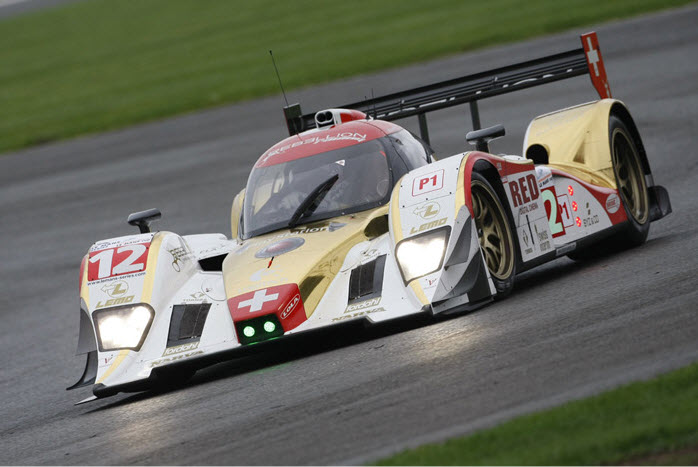
Toyota could return to the Le Mans 24 Hours as early as 2012


Toyota has been testing an all-new LMP1 car since last year, and could return to the Le Mans 24 Hours as early as 2012, according to this week's AUTOSPORT magazine.

The Japanese manufacturer commissioned the machine, which is known to incorporate hybrid technology and comply with the 2011 prototype technical regulations, from racing car constructor Dome.

When asked about the possibility of Toyota returning to top-line prototype racing, Vincent Beaumesnil, sporting manager of Le Mans organiser the Automobile Club de l'Ouest, said: "We are in contact with many manufacturers who are interested in LMP1, not just Toyota."

Toyota last competed at Le Mans as a full manufacturer in 1999, but supplied engines to the Rebellion LMP1 squad on a customer basis this year.

Theres always a first time. That car and bike blogs post porn among the cars is nothing new. But the site I got these from, posts gay porn. So beware

It's quite common that the Tumblr sites I find good bike and car photos on have naked women, but this is the first with naked men that I've come across.

I've got no issue with that, but wanted you to be warned because it's more than nude male models, it's guys having sex with guys as well. Some people find that really too much.

it's full of VW and Citroens primarily, with a smattering of race cars, muscle cars, and here is a sample of some of the cool cars on http://scrivmaggporn.blogspot.com/

Just about everything looks better in the Gulf racing colors
Can't figure out why the car was rusted, and fitted with custom opening doors

I'm surprised to see this Porsche in such bad condition, they were always in high demand


Above is the "Mercedes Bent" that i've photogrphed and posted a couple of times already
This is one a a handful of Bugatti Royale Napolean, they are enormous and it's too bad nothing is next to it to show the perspective

Fotos da Nova Mercedes-Benz Classe ML

Mostradas as imagens da nova Mercedes-Benz Classe ML. Mas sua apresentação oficial fica para o Salão de Frankfurt.

A terá Mercedes-Benz Classe ML seis tipos de motores de quatro cilindros. Na versão de entrada a ML 250 Bluetec, vem com motor 2.1 litros diesel com 204cv, na versão ML 350 Bluetec tem o motor 3.0 V6 diesel de 258cv. Na versão ML300 Hybrid, o motor diesel do ML250 será combinado com o elétrico de 20cv.

Por dentro ele vem em couro marrom e preto. E traz suspensão a ar Airmatic, controle de pressão dos pneus, luzes de freio adaptativas, sistema de visão noturna e reconhecimento de pedestres, detector de cansaço e de veículos no ponto cego, Park Assist, câmera traseira.

Mercedes-Benz SLS AMG Roadster revelado oficialmente

A Mercedes divulgou fotos oficiais do SLS AMG Roadster. Sua aparição oficial fica para Setembro, no Salão de Frankfurt.

O roadster perde a principal característica do SLS AMG, as asas de gaivota. A capota pode ser retirada em 11s mesmo em uma velocidade de até 50 km/h.

Ele vem com o motor 6.2 V8 de 571 cv com velocidade de 317 km/h indo de 0 aos 100 km/h é cumprida em 3,8 segundos. E tem o consumo médio de 13,2 litros aos cem.


Related Posts Plugin for WordPress, Blogger...