Showing posts with label Fiat. Show all posts

Novo Fiat 500 2012

Ícone mundial, o novo Fiat Cinquecento chega ao Brasil cheio de novidades que ressaltam a modernidade que faz parte da história do modelo desde o lançamento do Cinquecento original, há mais de 50 anos, em 1957.


Este novo Fiat Cinquecento representa, também, a primeira oportunidade para os norte-americanos de conhecer, dirigir e possuir um marco da indústria automobilística — é a volta da marca Fiat para os EUA.


Design, originalidade, inteligência, personalidade: passado, presente e futuro se mesclam no Fiat Cinquecento, tornando-o um objeto de desejo com todos os predicados para atender à demanda dos diferentes mercados ao redor do mundo.


Produzido em Toluca, México, na fábrica da Chrysler, o Fiat Cinquecento incorpora todos os mecanismos de segurança exigidos pela rígida regulamentação americana e traz, de série, um número maior de equipamentos para tornar a experiência de dirigi-lo ainda mais prazerosa e confortável. Foram quase 16 meses de preparação, entre investimentos, implementação de novos processos e procedimentos, instalação de equipamentos e ferramental, treinamento de mais de 2 mil trabalhadores e meios muito precisos de controle de qualidade, até o início efetivo da produção. Hoje, o novo Fiat Cinquecento já é comercializado nos Estados Unidos, Canadá e México.


Para os brasileiros, que tiveram o privilégio de conhecer o Fiat Cinquecento no final de 2009, esta nova gama que chega ao mercado reserva excelentes surpresas: é o primeiro modelo da marca no Brasil a receber o novo e revolucionário motor 1.4 16V com tecnologia MultiAir — criada e patenteada pela Fiat Powertrain —, que privilegia potência, torque, economia e baixas emissões; e pode vir com câmbio manual ou automático sequencial de 6 marchas. Também é o primeiro a contemplar o câmbio Dualogic® na opção do motor 1.4 EVO Flex, que equipa as versões de entrada.


Outro pioneirismo da marca no Brasil para o novo Fiat Cinquecento é o Eco:Drive, um sistema que tem como objetivo ajudar a melhorar a eficiência da condução para reduzir o consumo de combustível e a emissão de CO2 no meio ambiente.


A gama do novo Fiat Cinquecento é muita completa. Traz duas motorizações, três diferentes tipos de câmbios e cinco versões, além de uma série especial. A Prima Edizione, restrita a 500 exemplares numerados, chega junto com a linha 2012 para oferecer exclusividade e esportividade extras ao consumidor.


Repleto de tecnologia, o Fiat Cinquecento privilegia o conforto e a segurança dos passageiros. Entre os itens podemos destacar alguns, como ESS (sinalização de frenagem de emergência), freios com sistema ABS e EBD, ASR (controle de tração), ESP (controle de estabilidade), Hill Holder, Isofix e até sete air bags.


Com um projeto moderno, design único, opções de revestimentos internos diferenciados e inúmeros conteúdos, inclusive de série, o novo Fiat Cinquecento é o carro mais completo de sua categoria, e ainda chega ao mercado com preços bastante atraentes para o consumidor brasileiro.


Soma-se a isso tudo a personalização, uma característica bem forte do Fiat Cinquecento que oferece vários acessórios para deixá-lo com um visual único.


DOIS MOTORES, TRÊS CÂMBIOS


Na nova gama, o Fiat Cinquecento estará disponível em duas motorizações: 1.4 EVO Flex e o novo 1.4 16V MultiAir a gasolina. Três grandes novidades foram reservadas para o modelo:


• O motor 1.4 16V representa a primeira aplicação da tecnologia MultiAir – inventada e patenteada pela Fiat Powertrain – em um modelo Fiat no Brasil;


• As versões dotadas de motor 1.4 16V MultiAir podem ser equipadas com câmbio automático sequencial AISIN, de 6 marchas;


• O Fiat Cinquecento também é o primeiro a receber a combinação de motor 1.4 EVO Flex e câmbio Dualogic®.


O motor 1.4 EVO Flex que equipa as versões de entrada do novo Fiat Cinquecento produz potência máxima de 85 cv a gasolina e 88 cv a etanol. Seu torque máximo é de 12,4 kgfm a gasolina e 12,5 kgfm a etanol, sempre a 3.500 rpm. Pela primeira vez este motor pode vir associado ao câmbio Dualogic® de 5 marchas.


O motor 1.4 Evo desenvolvido pela Fiat Powertrain incorpora uma série de dispositivos projetados para redução de consumo e melhor aproveitamento energético, com menor emissão de poluentes e ruído.

Já o motor 1.4 16V MultiAir a gasolina — com tecnologia premiada mundialmente por diversas publicações —, presente nas demais versões do modelo, gera potência de 105 cv e torque máximo de 13,6 kgfm a 3.850 rpm. Ele incorpora avanços tecnológicos que melhoram sua potência e seu torque — e ainda o tornam mais econômico e menos poluente.


A nova tecnologia MultiAir controla a entrada de ar e a combustão. Ela garante o controle dinâmico da entrada de ar cilindro por cilindro, através do acionamento eletro-hidráulico das válvulas, um mecanismo muito mais preciso do que o utilizado nos motores convencionais.


O dispositivo MultiAir é constituído de um módulo totalmente integrado ao cabeçote. Seu objetivo é o acionamento, eletronicamente controlado, das válvulas de admissão por meio de um atuador eletro-hidráulico. Este módulo recebe óleo sob pressão proveniente de uma bomba posicionada no próprio eixo de comando de válvulas, que também faz o acionamento das válvulas de descarga através do acionamento tradicional das cames de escapamento. A função de abertura das válvulas de aspiração é executada conforme a necessidade do motor, podendo ir de fixa (regime de potência máxima), até completamente variável (baixas cargas e/ou baixas e médias rotações).


Os modos de abertura das válvulas de admissão são comandados pelo módulo MultiAir, que é integrado à central eletrônica do motor. O compartilhamento de informações com a central permite sua operação em quatro modos – Full Lift, Early Valve Closing, Late Valve Opening e Multi Lift –, de tal forma a obter sempre a otimização do rendimento.


Este motor no novo Fiat Cinquecento pode receber câmbio manual de 5 marchas ou automático sequencial de 6 marchas do fabricante AISIN.


O câmbio automático sequencial de 6 marchas oferece o máximo de conforto e prazer ao dirigir com menos consumo de combustível. Veja abaixo algumas de suas características:


• Quatro modos de funcionamento: Eco, Sport, Winter e Manual;


• Conversor de torque com lock-up de última geração;


• Função Kick-Down;


• Brake Assist: reduz automaticamente as marchas em freadas bruscas com funcionamento integrado ao ABS;


• Adaptação inteligente ao modo de condução:

- Sensor Up-down Slope para adaptação do veículo à inclinação

- Função Cornering, que impede o avanço das marchas em curvas

- Função Fast-Off, que inibe a troca de marcha desnecessária quando o condutor tira o pé rapidamente do acelerador;


• Funções Neutral Control e Auto Learning, para redução de consumo de combustível.


Série Especial “Prima Edizione”


Apenas 500 exemplares numerados desta série limitada chegarão ao Brasil junto com o lançamento das versões regulares do modelo. A série especial é aplicada sobre a versão Sport Air. Sua estética exclusiva, externa e interna, ressalta a diferenciação e a esportividade do modelo. Apenas três cores – vermelho Sfrontato, branco Caldo e cinza Sfrenato – estarão disponíveis, e todos os Prima Edizione serão equipados com câmbio mecânico.


Externamente, vários detalhes de acabamento distinguem a série especial da versão Sport Air, entre eles o teto, as calotas dos retrovisores e o spoiler traseiro em preto brilhante. Também conta com faixas laterais exclusivas com logotipo “500”, além das rodas aro 16” com pintura preta exclusiva e a sigla específica “Prima Edizione” na coluna das portas.


Internamente, a série especial traz costuras vermelhas no volante, na coifa da alavanca de câmbio e nos bancos, painel na cor grafite, logotipo “500” em vermelho nos tapetes e uma sigla “Prima Edizione” no encosto dos bancos dianteiros e outra sigla com o número do exemplar do lado direito do painel.


Confira a lista de preços do Fiat 500

Cult 1.4 8V – R$ 39.990

Cult 1.4 8V Dualogic – R$ 42.990

SportAir 1.4 16V – R$ 48.800

SportAir automática 1.4 16V – R$ 52.800

LoungeAir 1.4 16V – R$ 54.800


Fonte Fiat

Novo Fiat Siena 2012, Fotos.


Art of the automobile (not car) examples of the race cars and advertising of the first 1/4 of the 20th century from OldMotor.com


 This was a jab at the outspoken nut reactionists who didn't want the automobiles to be legal and on the same roads as the horse and carriages. Auto's were loud, fast, and unknown. Sorta the same reaction that Rock and Roll of the 50's, and hot rodders of the 40's had to deal with. So when the Sportsman in the above image asked about the motorist killing anything it was indicating the conservative notion of the old folks that autos were going to wantonly kill pedestrians, horses, and whatever else was in it's way. Maybe there was a thread of truth, because no one was familiar with engines, gasoline, batteries, and powerful cars... all dangerous, explosive, and in the hands of people with zero experience with the dangers of each.


 The above is the artwork of Stephan Marjoram, a fantastic photographer I've posted the work of before, I recommend you follow this link to the 2nd page, and see the awesome photos Stephan posted http://justacarguy.blogspot.com/search?q=marjoram&updated-max=2010-02-28T22%3A44%3A00-08%3A00&max-results=20. I didn't know he was such a really damn good artist, but he is. http://stefanmarjoram.com/art.htm

Fiat Strada com câmbio Dualogic

A Fiat anunciou que a versão da picape Fiat Strada Adventure Cabine Dupla agora vem equipada com câmbio Dualogic. O câmbio Dualogic permite as trocas de marchas podem ser feitas de forma automática ou manual.


A Strada Adventure Cabine Dupla Dualogic traz de série condicionado, direção hidráulica, freios ABS, vidros elétricos com função one-touch e antiesmagamento, travas elétricas, faróis de neblina, rodas de liga leve de 15 polegadas e pneus de uso misto, bússola, inclinômetros longitudinal e transversal. O modelo pode ser comprado por 55.350 reais.


Justificar

Vídeo Fiat Freemont


Fonte

Fiat Freemont

Destinado a ocupar o topo de linha da marca Fiat, o Freemont chega ao Brasil como o primeiro modelo resultante da associação da Fiat com o grupo Chrysler. Seu nome, assim como o próprio modelo, evoca o sentido de liberdade, do prazer da vida ao ar livre e da possibilidade de enfrentar qualquer situação da vida cotidiana com muita sofisticação.


Trata-se de um veículo projetado para atender às diferentes exigências dos consumidores que buscam um veículo espaçoso, cômodo, seguro, completo, gostoso de dirigir e versátil para o dia a dia ou para o tempo livre nos finais de semana. No Fiat Freemont você encontra todos os carros que você quer.


O moderno design do Fiat Freemont, fortemente caracterizado, apresenta formas marcantes, com linhas musculosas e ao mesmo tempo sofisticadas. Neste visual forte as lanternas horizontais traseiras com lâmpadas de LED revelam a grande variedade de tecnologia presente no modelo.


O novo veículo, produzido em Toluca, no México, e recentemente lançado na Europa, combina flexibilidade e funcionalidade com um estilo diferente e original. Suas dimensões garantem excelente conforto e comodidade interna, além de grande versatilidade: o Fiat Freemont é o único a oferecer 7 lugares em sua categoria no Brasil.


Todos os ocupantes têm o máximo de visibilidade externa. As três fileiras dos bancos estão posicionadas de forma a criar o efeito “anfiteatro”, ou seja, a segunda fileira está em posição mais elevada que a primeira e a terceira mais elevada que a segunda. O Freemont permite também mais de 30 diferentes configurações dos bancos.


A terceira fileira tem bancos espaçosos, que são facilmente acessíveis graças ao excelente ângulo de 90⁰ de abertura das portas traseiras e do sistema Easy Entry da segunda fileira dos bancos. Com um simples movimento os bancos da terceira fileira podem ser ocultados sob o assoalho do veículo, ampliando o espaço para as bagagens.


A segunda fileira de bancos também conta com o inovador sistema child booster que, graças à elevação da parte central dos assentos, permite posicionar corretamente crianças entre 4 e 7,5 anos. O sistema otimiza a geometria do cinto de segurança e garante maior proteção, praticidade e conforto. Esta particularidade, em conjunto com outros itens de conveniência e conforto, faz com que o Fiat Freemont seja um carro perfeito para a família.


O conforto a bordo está assegurado pela posição de dirigir mais elevada, pelos seus assentos ergonômicos, por numerosos espaços porta-objetos (mais de 20 espaços), pelo amplo porta-malas dotado de duplo compartimento, e pela capacidade de transportar até 2.301 litros de bagagens.


Para proporcionar maior praticidade e uma convivência ainda mais prazerosa, o Fiat Freemont traz o sistema Keyless Entry / Go, que funciona por sensores de proximidade, dispensando o uso de chave para abrir as portas ou ligar o motor. Também chega com o avançado sistema multimídia de entretenimento Uconnect™ com tela colorida touch screen de 4.3 polegadas. Além do ar-condicionado automático digital Trizone que atende com a máxima eficiência todos os ocupantes do veículo.


Este novo modelo da Fiat se destaca por ser um carro muito completo e mais, por oferecer equipamentos de alta tecnologia, como os de segurança, que conta, por exemplo, com a presença de até seis airbags, sistema antibloqueio de freios (ABS), programa Eletrônico de Estabilidade (ESP - Electronic Stability Program) e sistema anticapotamento (ERM - Electronic Roll Mitigation). Também são relevantes para a segurança a presença dos assentos para crianças, piloto automático e muitos outros equipamentos. O Fiat Freemont ainda possui um sistema inteligente de controle de reboque (TSC - Trailer Sway Control), que evita oscilações perigosas.


O eficiente motor do Freemont é um 2.4 litros, DOHC, 16 válvulas, com comando de válvulas variável (Dual VVT). O modelo vem com câmbio automático de quatro marchas com opção de mudanças sequenciais.


Por ser o carro topo de linha da marca e muito bem equipado, o Fiat Freemont chega ao mercado brasileiro com duas versões em sua gama: Emotion e Precision.


Fonte Fiat

Fiat 500 First Edition no mercado chinês

O Fiat 500 entra oficialmente no mercado chinês com série especial First Edition. O modelo foi produzido por cinco designers chineses. Serão produzidas em apenas 100 unidades.

O cliente que comprar um 500 entre 12 de julho e 15 de setembro poderão participar de um sorteio que para substituir o modelo comprado por um 500 First Edition.

O First Edition é baseado na versão Lounge com câmbio Dualogic e motor 1.4 MultiAir de 101 cv de potência.


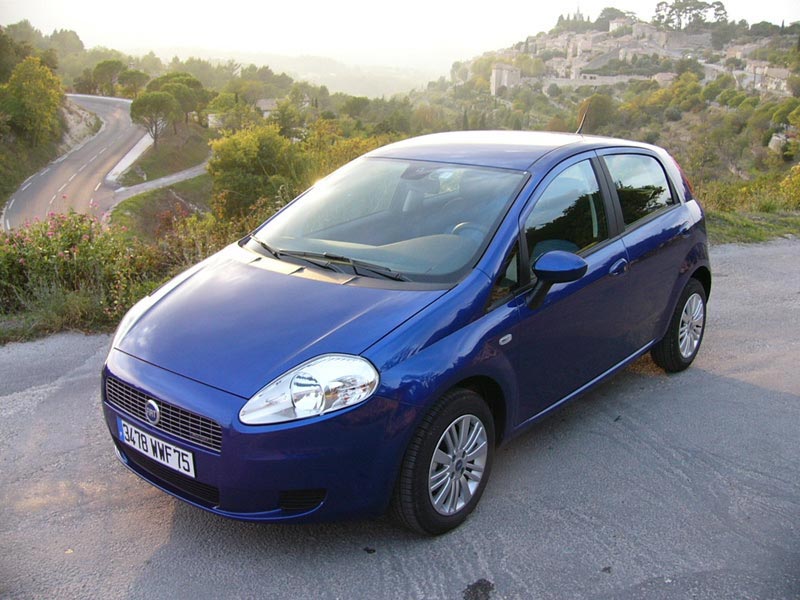
Fiat Punto


The Fiat Punto is a supermini produced by the Italian manufacturer, Fiat, since 1993.Internally codenamed Project 176, the Punto was announced in September 1993 and launched in late 1993 as a replacement for the ageing Fiat Uno. The Fiat Punto was voted European Car of the Year for 1995. The Punto's distinctive clean-cut styling by Giorgetto Giugiaro was an instant hit (though one of the car's most recognisable features, the vertical tail/rear lights, were not part of Giugiaro's original design and were in fact added later in-house at Fiat's factory[citation needed]). Competitive pricing which undercut rivals such as the Opel/Vauxhall Corsa and Volkswagen Polo also helped the Punto become an instant success in the European marketplace.Entry-level in the Punto range were the 1.1 and 1.2 L petrol engines and the 1.7 diesel engine. The 1.2 engine's actual capacity is 1.242 litres, available in 3 versions. The first, was fitted in the Punto ELX 75 and produced 75 hp (56 kW) at 6000 rpm while the second, fitted to Punto ELX 85 produced 86 hp (64 kW) at 6000 rpm. The third was a 60 hp (45 kW) engine which eventually replaced the 1.1 54 hp engine.A 1.6 Sporting was also available producing 88 bhp, but the best performing version was the 136 PS (100 kW; 134 hp) 1.4 GT using an evolution of the turbocharged 128 SOHC engine originally found in the Fiat Uno Turbo Mk II- capable of running over 200 km/h (120 mph) and reaching 100 km/h (62 mph) in just 7.9 seconds. This car was also fitted with a 5-speed manual gearbox, with different gear ratios than the ELX series. During the years the GT was made in three different "series" with power 136 PS (100 kW; 134 hp) (1993–1995),133 PS (98 kW; 131 hp) (1995–1997) and 130 PS (96 kW; 130 hp) (1997–1999).[Particular versions of the Mark I Punto were the Punto 6Speed, a 1.1 FIRE Punto 55 with a 6-speed gearbox, the Punto Selecta with a CVT-type automatic gearbox, and the Punto ED (Economical Drive), a 1.1 Punto whose 5-speed gearbox was designed for high fuel.


Fiat Punto Abarth


The second generation Nuova (New) Punto, codenamed Project 188, was launched in late 1999. The styling was all-new while retaining the original Punto's distinctive shape and design, while the chassis and interior were completely overhauled. The new Punto also became the first Fiat in decades to carry the original round Fiat badge, to celebrate Fiat's centenary.The 1.1 and 1.4 turbo engines were discontinued due to emissions issues, and the entry-level models had only a 1.2 petrol unit (with either 8 or 16 valves, giving 60 and 80 hp (60 kW) respectively) or a 1.9 diesel (with or without common-rail injection)Two sporty versions were offered. The 1.2 16 valve Sporting model with a 6-speed manual, and the hot 1.8 HGT which could reach almost 130 mph (210 km/h). The 1.2 16V model also has a CVT-equipped variant (with a sequential manual shift mode consisting of 6 gears, 7 for the Sporting model). The 1.8 HGT accelerates 0-60 in 8.0 seconds. It was considered a big improvement in handling over the Mark 1 GT. The HGT was also available (in limited numbers) as an "HGT Abarth" which added deeper bumpers, rear spoiler, side skirts, new alloy wheels and interior trim. The HGT Abarth had no technical improvements over the regular HGT.The second generation Punto has also adopted Dualdrive electric power steering and comes with two operation modes, using an electric motor, rather than a hydraulic pump driven by the engine. This results in reduced fuel consumption and less environmental impact. It has a fuel economy of 5.6 L/100 km (50 mpg-imp; 42 mpg-US) - urban and 3.9 L/100 km (72 mpg-imp; 60 mpg-US) - extra urban for the 1.9 diesel. The 1.8 petrol does 8.8 L/100 km (32 mpg-imp; 27 mpg-US) - urban and 5.3 L/100 km (53 mpg-imp; 44 mpg-US) - extra urban.


In early 2003, Fiat celebrated the rollout of the 5,000,000th production Punto. In the same year, the second generation facelift brought further revisions to the platform, including extensive changes to the exterior styling and engines, partly due to changes in pedestrian safety regulations. The round Fiat badge, found only on the bonnet of second generation models, was introduced on the tailgate of the second generation facelift. On June 1, 2005, Fiat produced the 6,000,000th Punto at the Melfi plant. This Punto is currently the fourth-best selling supermini in Europe. Fiat Punto is now being produced in Italy and Serbia. Engine changes included a new 1.4 16v engine, alongside the staple 1.2 & 1.2 16v variants, and the introduction of two HGT versions, 1.9 L Multijet diesel , and 1.8 L 16v petrol engine which could reach almost 130 mph (210 km/h) continued over from the Mark 2. There was an introduction also of the 1.3 L common rail diesel MultiJet engine.Despite the launch of the slightly larger Grande Punto in 2005, the 1999 Punto is still in production, and was launched for the first time in Chile in 2007, as Punto Classic. It is to be replaced by a new B segment model. In October 2005, Serbian manufacturer Zastava reached an agreement with Fiat to make this version under licence with the model name Zastava 10. After acquiring Zastava in autumn 2008, Fiat continued production of this vehicle under the brandname Fiat Punto Classic in March, 2009. The fully new Grande Punto codenamed Project 199, was unveiled at the 2005 Frankfurt Motor Show and went on sale later on that year. Again styled by Giugiaro, the car is using the Fiat/GM SCCS platform. In 2009 the Grande Punto was re-named Punto Evo and given some minor styling tweaks including a new front and revised rear lights. It also received a new interior.

Bravo T-Jet por R$ 68.950

Com belo design, tecnologia e excelente nível de acabamento, o Fiat Bravo vem superando todas as expectativas de seus compradores. Agora a Fiat coloca no mercado a versão top de linha do modelo, o Bravo T-Jet, sinônimo de alto desempenho e muita segurança. Ele chega para consolidar a reputação de inovação da Fiat, provando mais uma vez que a evolução não conhece limites.


E a evolução é mesmo a marca dele. O Bravo T-Jet foi concebido para agradar o mais exigente consumidor com equipamentos que o tornam completo e sofisticado, além da mais pura esportividade, com sua mecânica apurada e de alta performance.


A versão T-Jet chega ao mercado com diversos itens exclusivos de série, tanto externos como internos. São eles: rodas de liga leve 17”, faróis dianteiros escurecidos, minissaias laterais, spoiler, soleira das portas dianteiras com inscrição “Overbooster” e saída da descarga dupla cromada. Internamente traz painel de instrumentos com acabamento “Carbon Look Nero”, revestimento interno em tear esportivo, pedaleira e apóia-pé esportivos, mais volante, freio de mão e pomo da alavanca do câmbio em couro com costuras vermelhas. Oferece também nesta versão as tecnologias ESP, ASR e Hill Holder. Além disso, traz ainda suspensão com acerto esportivo, pinças de freio dianteiras e traseiras pintadas de vermelho e sigla T-Jet na grade dianteira e na traseira.


A esportividade não está apenas no design Italiano, o Bravo T-Jet traz sob seu capô o motor Turbo 1.4 16V T-Jet. Compacto e moderno, alia esportividade e desempenho, produzindo 152 cv de potência e 21,1 kgfm de torque a 2.250 rpm. O Fiat Bravo T-Jet traz também a função “Overbooster”, que quando ativada a pressão do turbo é aumentada, conferindo ao veículo ainda maior esportividade, evidenciando uma maior sensação de potência com aumento do torque ao valor máximo de 23 kgfm. O motor T-Jet vem acoplado a um câmbio mecânico de 6 marchas. Também foi feita uma nova calibração na direção elétrica, o que a deixou mais firme e adequada ao modo de condução esportiva.


Muito bem equipada de série, a versão T-Jet traz, além dos itens exclusivos citados acima, conteúdos que ampliam a sua sofisticação, aumentam seu conforto e valorizam, ainda mais, o prazer de dirigi-lo, como ar condicionado automático Dualtemp, sensor de estacionamento traseiro, Blue&Me, volante em couro com comandos do rádio e telefone, faróis de neblina com sistema cornering, Logo Push, HSD (air bag duplo + ABS), entre outros. Opcionalmente, pode ser equipado com até sete air bags, faróis de xenon, rodas de liga leve 18”.

O Bravo T-Jet chega ao mercado por apenas R$ 68.950.


Fonte Fiat

photos I meant to post when I still knew where I'd found them

1938 Alfa 8C 2900B Le Mans
Those are incredibly good looking Jaguars
On of the most remarkable and well designed instrument gauge clusters I've ever seen
Fiat 1400b junior Ghia
Awesome use of a hoodscoop to make an ugly car better looking
Sorry, I don't know where these came from anymore, but I bet they were from websites that I've posted from in the past month

Enzo driving the Targa Florio in 1922

read about it if you like, very dry, dull, and biographical view of how and why he was there http://forix.autosport.com/8w/targa.html

Linha Punto 2012 chega com série Itália

A Fiat lançou a linha Punto 2012 que a partir de agora tem a versão de entrada denominada Attractive com motor 1.4 e série especial Itália.

O kit Itália que vem na versão Attractive 1.4 traz rodas 16”, spoiler na cor do veículo, faróis e lanternas traseiras com máscara negra, ar-condicionado, rádio CD MP3 integrado ao painel com RDS, volante com regulagem de altura e profundidade ,acabamento em prata, chave canivete, fechamento das portas e vidros e retrovisores externos elétricos. O valor do kit sai por R$ 3.500,00.

Preços sugeridos para a linha Fiat Punto 2012:
Punto Attractive 1.4 – R$ 40.380
Punto Essence 1.6 16V – R$ 44.890
Punto Essence 1.6 16V Dualogic – R$ 47.630
Punto Essence 1.8 16V – R$ 46.710
Punto Essence 1.8 16V Dualogic – R$ 49.260
Punto Sporting 1.8 16V – R$ 51.700
Punto Sporting 1.8 16V Dualogic – R$ 54.260
Punto T-Jet – R$ 65.830

Fiat Linea Essence

A Fiat passa a oferecer para a linha 2012 o Linea Essence que equivale a versão de entrada LX.

A versão Essence vem com motor 1.8 16V com transmissão de cinco velocidades mecânica ou automatizada Dualogic.

Traz de série computador de bordo, direção hidráulica, airbag duplo, ar-condicionado, faróis de neblina, volante revestido com couro, vidros, travas e espelhos elétricos, freios ABS (antitravamento) e roda de liga leve de 15 polegadas.

A versão Essence 1.8, tem preço sugerido de R$ 56.700 com transmissão mecânica e R$ 59.700 com Dualogic.


Fiat 500

The Fiat 500 is a car produced by the Fiat company of Italy between 1957 and 1975, with limited production of the Fiat 500 K estate continuing until 1977. The car was designed by Dante Giacosa. Launched as the Nuova (new) 500 in July 1957, it was marketed as a cheap and practical town car. Measuring only 3 metres (~10 feet) long, and originally powered by a tiny 479 cc two-cylinder, air-cooled engine, the 500 redefined the term "small car" and is considered one of the first city cars. In 2007 Fiat launched a similar styled, longer and heavier front wheel drive car, the Fiat Nuova 500. To meet the demands of the post-war market which called for economy cars, the Fiat 500 was rear-engined on the pattern of the Volkswagen Beetle, just like its bigger brother, the 1955 Fiat 600. Several car makers followed the now uncommon rear engine configuration at the time and were quite successful. The Neckar version manufactured in Heilbronn under a complicated deal involving NSU, was introduced in October 1961. In Upper Austria the firm of Steyr-Puch also produced cars based, by agreement, on the Fiat 500. Despite its diminutive size, the 500 proved to be an enormously practical and popular vehicle throughout Europe. Besides the two-door coupé, it was also available as the "Giardiniera" station wagon; this variant featured the standard engine laid on its side, the wheelbase lengthened by 10 cm (4 in) which yielded a usable rear seat, a full-length sunroof, and larger brakes from the Fiat 600. Sports models were famously produced by Abarth, as well as by Giannini. An Austrian variant, produced by Steyr-Daimler-Puch, the 1957–1969 Steyr-Puch 500, had a motorcycle-derived Puch boxer twin motor, a sports model of which was the 1964–1968 Steyr-Puch 650 TR2. Production of the 500 ended in 1975, although its replacement, the Fiat 126, was launched two years earlier. The 126 was never as popular as its predecessor in Italy, but was (and still is) enormously popular in the former Eastern Bloc countries, where it is famed for its mechanical durability and high fuel economy.


Top Gear Fiat 500 Abarth SS


The 'original' new 500, the Nuova, has a smaller two-cylinder engine than all newer models, at 479 cc (500cc nominal), hence the name, and producing just 13 bhp. This model also features a fabric roof folding all the way back to the rear of the vehicle, like that of a Citroën 2CV rather than the later roof design, which only folds half way back along the roof. The Nuova is one of three models featuring "suicide doors". There is also a stylish Sport version of the Nuova, which features a distinctive red stripe and a more powerful engine, bored out to 499.5 cc from the original 479 cc engine, thus producing an impressive 21 bhp from the same original block.Replacing the original Nuova in 1960, the D looks very similar to the Nuova, but there are two key differences. One is the engine size (the D features an uprated 499 cc engine producing 17 bhp as standard—this engine is used right through until the end of the L in 1973) and the other is the roof: the standard D roof does not fold back as far as the roof on the Nuova, though it was also available as the "Transformable" with the same roof as the Nuova. The D also features "suicide doors".The estate version of the Fiat 500 is the longest running model. The engine is laid under the floor of the boot to create a flat loading surface. The roof on this model also stretches all the way to the rear, not stopping above the driver and front passenger as it does in other models of the same period. The K also features "suicide doors" and is the only model to continue to sport this door type in to the 1970s.The F spans two periods of 500 production, the D and the L. As such, it is the most frequently misidentified model. Between 1965 and 1969 the F carried the same badging as the D, but the two models are distinguishable by the positioning of their door hinges. The D has "suicide doors": the F, produced from June 1965, at last featured front-hinged doors. Between 1969 and 1972 the F was sold alongside the Lusso model as a cheaper "base model" alternative. While the F and L are mechanically very similar, the key differences are the bumpers (the L has an extra chrome nudge bar) and the interior (the F interior is nearly identical to the original 1957 design while the L sports a much more modern look).The penultimate model, the main change for the L is a much modernized interior (including a renewed dashboard) which brought the Fiat 500 up to date. Greater comfort and style were provided in this new model for the new generation.The last incarnation of the Fiat 500 was the R model. It had a larger 594 cc engine, designed by Abarth, giving it a more usable power rating of 23 bhp, came with a syncromesh gearbox. The floor-pan which was from either the 'L', or later, the new 126. It was also more comfortable, but more simply trimmed and equipped than before — the fuel gauge was omitted and only the low fuel indicator remained. The 500 R was also a stop-gap for Fiat prior to the launch of the Fiat 126, and when the new 126 was launched, sales of the old Fiat 500 R plummeted. It sold alongside the Fiat 126 for another two years before Fiat retired the 500.


Carrozzeria Ghia made a custom "Jolly" version of the 500 inspired by the limited edition Fiat 600 Jolly. Fiat previewed the all new 500 in March 2007—exactly 50 years after the first Fiat 500 was presented. The design of the new 2007 Fiat 500 is based on the 2004 Fiat Trepiuno concept. This car features a distinctive retro-look just like the Volkswagen New Beetle and BMW MINI but is substantially cheaper than those cars, with a starting price of €10,500 (similar to how the original Fiat 500 was cheaper than the Volkswagen Beetle and Austin Mini). Fiat shares the underpinnings of the new 500 with Ford for the 2009 Ford Ka. Production takes place in Fiat facilities in Tychy, Poland, and was scheduled for mid 2007, with commercial debut in September 2007. The Nuova 500 was introduced in Mexico in September 2008, powered the 1.4 L 16V 100 PS (74 kW; 99 hp) engine, transmissions are dualogic for the 500 Classic, 500 Lounge and 500 Vintage trims or six-speed manual gearbox for the 500 Sport Trim. The Abarth 500, Abarth 500 esseesse, Abarth 500C and the Abarth 695 Tributo Ferrari variants have been sold through independent importers. Mexico became the first country in the Americas in which the Nuova 500 is sold. In 1995 British shoegazing band Lush recorded a tribute song to Fiat 500. The song, aptly named 500, was released on the group's final album Lovelife in 1996. A remixed version of the song, renamed 500 (Shake Baby Shake), was released as the groups final single later that year, reaching #21 in the UK singles chart. Free diving world champion Enzo Molinari and his brother Roberto drive a beaten-up Fiat 500 with a trailer full of diving equipment in the movie The Big Blue. Both actors and the car later featured in Japanese TV commercials for 'Lazer 100' gasoline. In The Castle of Cagliostro, a Japanese animated film starring the master thief Arsène Lupin III, he and his close friend Daisuke Jigen escape on a Fiat 500 pursuit after robbing the casino of Monaco. The car is also seen frequently in other animated iterations of the franchise, including the 1971-72 television series and the 2008 special Red Vs Green. In the 2006 animated movie Cars, produced by Pixar and populated by anthropomorphic motor vehicles, the automotive character of Luigi is a 1959 Fiat 500.
Related Posts Plugin for WordPress, Blogger...